
Robert Lee Frost
1874-1963

Robert Frost was an American poet that was most famous for his rustic and rural poems written in "refreshing" American colloquial speech. Because, you know, the word "colloquial" is still colloquial American English. Frost is most commonly associated with rural scenes in New England, so imagine my surprise when I found out that Frost was born in San Francisco. He moved to Massachusetts after his father's death and New England became his base.

New England: The first storm is the pretty one. The others were adopted
Before I started this month's poetry, I already knew of three of Frost's poems. Two of them, Fire and Ice and Stopping by Woods on a Snowy Evening, I'll get to in my next blog post (I promise it will be soon) because they are two of my all-time favorite poems, but the third is a poem that I bet you already know. The Road Not Taken has become a staple in the American culture. How many times have you heard it quoted (and often misquoted) on television, in movies, or, my personal favorite cliche, at graduations?
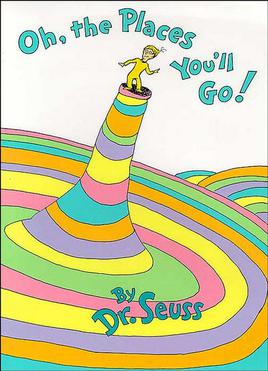
Beats the Hell out of this Classic. Am I right?
The first time I heard this poem, I was in elementary school and my teacher was reading from a children's book. I don't remember my reaction, and that's a terrible shame. Poems have many aspects that add to their impact, from their aesthetic appeal to the wordplay, but arguably the most powerful aspect is the impact it has on the audience. The best part about this is that the impact changes as you change. Heraclitus, an ancient Greek philosopher, once said "You cannot step twice in the same stream", and in this vein I would argue that you can't read the same poem twice. I wish I could remember how I reacted that first time I heard this poem, even if it was a simple "I liked it". It would give me a better grasp of where I came from, and how far I've come. I do remember my reaction during high school, and it wasn't good. I, like many other high school kids, thought that by disliking the classics I would gain academic cred. Now please bear in mind, this was several years before the advent of the American "Hipster Culture", which made me a Nerd and far from cool.

Although I did wear trashbag Penguin suits before they were cool.
I think I've grown quite a bit from that cynical nerd kid and I think it's time to look at my reaction to the poem once more. Feel free to post your comments with your own reactions to this poem as well. That's the second most important aspect of poetry: the conversation they ignite. Some of the best conversations I've ever had involved differing views on poems and their meanings. Since reading them is such a personal experience, the more people involved in the discussion brings more facets to the poem's impact. Now that I've waxed academic on my views on poetry, let's have a look at the first poem:
The Road Not Taken
Two roads diverged in a yellow wood,
And sorry I could not travel both
And be one traveler, long I stood
And looked down one as far as I could
To where it bent in the undergrowth;
Then took the other, as just as fair,
And having perhaps the better claim,
Because it was grassy and wanted wear;
Though as for that the passing there
Had worn them really about the same,
And both that morning equally lay
In leaves no step had trodden black.
Oh, I kept the first for another day!
Yet knowing how way leads on to way,
I doubted if I should ever come back.
I shall be telling this with a sigh
Somewhere ages and ages hence:
Two roads diverged in a wood, and I—
I took the one less traveled by,
And that has made all the difference.
Like I said earlier, this is possibly the most over-quoted poem for graduations and big moments in life, yet I don't think people have really looked into it. Most of the people I know who have quoted it would be surprised to know the title. In fact, I recently heard a speaker at a graduation refer to it as "Robert Frost's The Road Less Traveled". When you see how it is often quoted, usually with only the last two lines or the final stanza, it's totally understandable to think that the focus of the poem is on the path he took and how he was one of the few who chose it. We think of him blazing a new path, breaking from the crowds, leaving the sheep to follow each other down that other, more beaten track. Yet it's not the case. The title is "The Road Not Taken". The narrator isn't a man at a crossroads, trying to decide which path to take. No, he's a man who has gone down that path and chosen many others, and now he's reflecting on his choice. The third stanza is possibly my favorite:
And both that morning equally lay
In leaves no step had trodden black.
Oh, I kept the first for another day!
Yet knowing how way leads on to way,
I doubted if I should ever come back.

If you know me, you know that I have a terrible issue with making decisions. If I had to choose between making decisions or having them made for me, I'd give up and take a nap. Frost plays off something like nostalgia. It's not regret that he feels, except the regret that he might never get a chance to take the road not traveled. I think this is the crux of this poem. Here Frost stops thinking about the choice he didn't make, and instead starts to realize that it wasn't the choice he made, but the ones he left behind that shaped him. The choice may have seemed trivial, but like he says at the end of the poem, it was that choice that made all the difference.
I should have gone with sprinkles...
The poem is dedicated to the road he didn't take. How does that change the quotes we've all heard? Instead of empowering people to blaze new paths and not follow the herd, it forces the reader to appreciate the choices that they've made, and the ones that they're going to make. This realization was what took this poem out of cliche for me. Life is a series of choices, a series of paths diverging in a yellow wood. Its natural to look back and wonder what if, but Frost really captures the fact that where we are today is a direct result of not only the paths we chose, but also those that we set aside, with a hope that we may return some day.


